4407 Manchester Ave # 204, Encinitas, CA 92024, United States

What to Expect
A clear walkthrough of how care works, from your first visit through ongoing care.
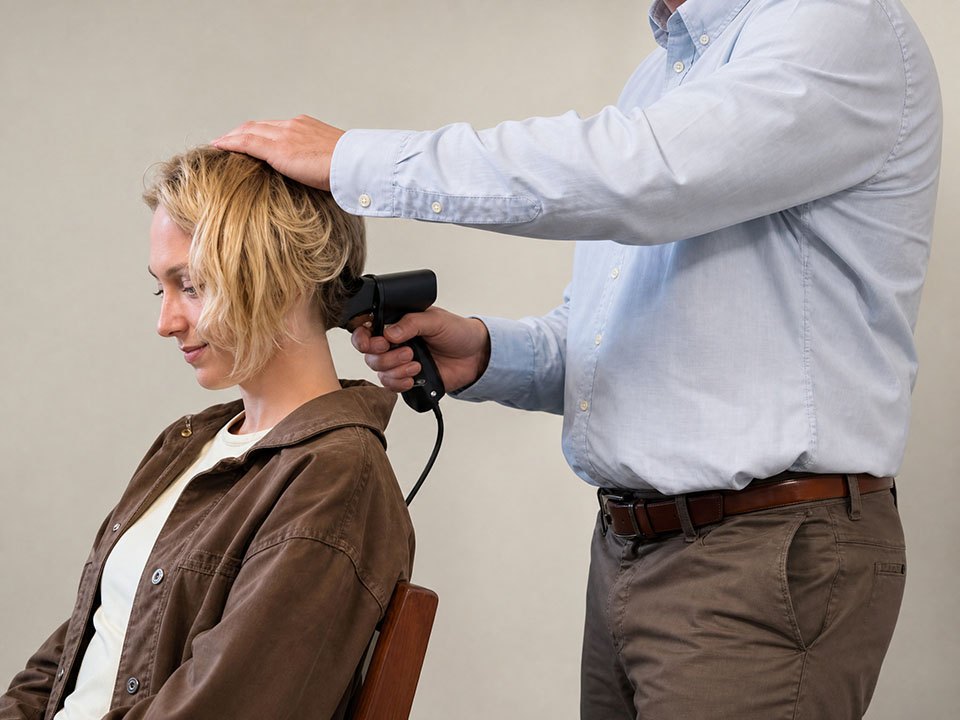
Care is built around understanding what is happening before any adjustment is made. We start with a detailed exam, review the findings, and from there we build a plan around what your body actually shows us.
How it works
1
Book and prepare
Booking is online. You can also call or text the office at (760) 415-7478 with any questions.
Once your appointment is scheduled, you will receive intake forms to complete in advance. The forms cover your history, current symptoms, your goals, and any relevant prior imaging or testing. Completing them ahead of time means the first visit can focus on you, not paperwork.
2
Your first visit
The first visit covers a detailed conversation about your history, hands-on assessment, and several objective tools. By the end of the visit, we have a clear picture of how your neck is functioning and whether an adjustment is appropriate that day.
The exam combines:
- NeckCare testing for range of motion, joint position sense, and sensorimotor control
- Tytron thermography for thermal pattern assessment
- BTrackS balance assessment for computerized balance and stability
- Neck and spine palpation for restricted motion and structural patterns
- 3D CBCT imaging when clinically appropriate, to map the upper cervical joints in detail
3
Review and plan
Once the exam is complete, the findings are reviewed with you. If an upper cervical adjustment is appropriate, it is performed on the same visit, gently and specifically, based on your individual anatomy.
From there, a care plan is built around your history, your goals, and what the testing actually shows.
4
Ongoing care
On each follow-up, the first question is whether you need an upper cervical adjustment that day. The answer comes from objective findings, not from a fixed schedule.
If an adjustment is needed, the correction is gentle, specific, and based on your individual anatomy. You rest briefly afterward before going home.
If an adjustment is not needed, that is a good sign. The visit may include a supplemental adjustment elsewhere on the spine, soft tissue therapy, or neck-strengthening work. Every visit is tailored to what your body needs that day.
Progress is tracked with the same objective tools used at the first visit, so changes can be measured rather than assumed.
Care plans and payment
Care plans are based on your history, your goals, and your exam findings. There are two ways to pay:
Pay as you go. Each visit billed individually.
First phase of care. Booking the first phase, typically four to six weeks, comes with a discount.
The office is out-of-network. Documentation is provided for reimbursement. HSA and FSA accepted.
What progress looks like
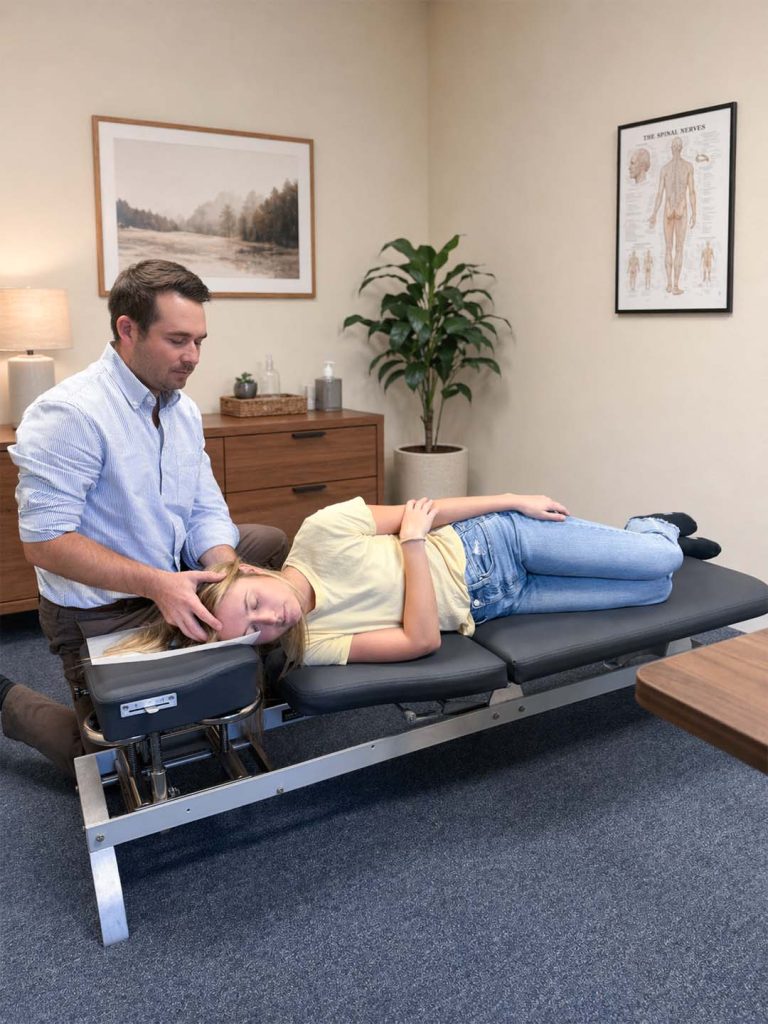
Some patients notice changes quickly, sometimes within the first adjustment. Others take more time. It depends on your history, how long the issue has been present, what the exam shows, and how your body responds.
After the first few visits, you may notice changes in pain, tension, range of motion, posture, balance, headaches, or overall body awareness. Some people feel immediate relief. Some feel sore or tired. Some notice more gradual changes over several visits.
The goal is progress over time, not instant miracle results.
The body is built to heal and adapt, given the right inputs. Care provides those inputs as specifically and gently as possible, and tracks what changes.
Frequently Asked Questions
How long is the first visit?
The first visit is a screening visit and is usually less than an hour. It gives us time to talk through your history, understand what you are dealing with, answer questions, and decide whether you are a good fit for upper cervical care before moving into a full exam or care plan.
Will I be adjusted on my first visit?
No. The first visit is meant to determine whether upper cervical care is a good fit. If it looks appropriate, the next step is a full exam, objective testing, and a care plan based on what your body actually shows us.
What should I wear?
Comfortable clothing is fine. No special preparation is needed.
Should I bring prior imaging or records?
Yes, if you have them. Prior MRIs, CT scans, x-rays, or specialist notes are useful. They can be uploaded ahead of the visit or brought along.
What if I do not feel anything during the adjustment?
That is common. Many patients are surprised by how light the correction feels. The amount of force used has nothing to do with whether the correction was effective.
What if I feel sore or tired afterward?
This is normal in the first few visits. The body is adjusting to a new pattern. Soreness, tiredness, or mild headache after a visit usually settles within a day or two.
How often will I need to come in?
Most care plans start with a more focused first phase, often one to two visits per week for about four to six weeks, depending on your history, exam findings, and how well your correction holds. As your body stabilizes and objective findings improve, visits usually taper.
Do you take insurance?
The office is out-of-network. Documentation is provided for reimbursement. HSA and FSA accepted.