4407 Manchester Ave # 204, Encinitas, CA 92024, United States
Our Tech
How we measure what is happening, and track what changes.
Care is guided by measurement, not feel alone. Four tools sit at the center of the practice: 3D CBCT imaging, NeckCare, BTrackS, and Tytron thermography. Each measures something different. Together, they build a more complete picture of how the upper neck is functioning, and a measurable way to track what changes over time.
3D CBCT Imaging
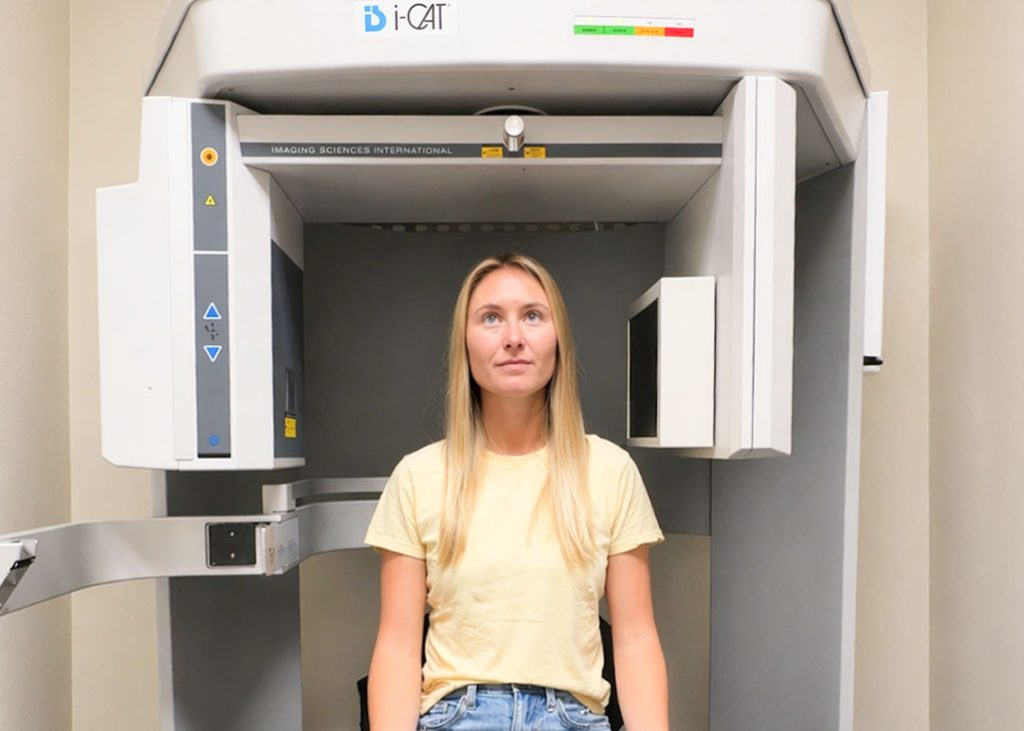
3D CBCT (cone beam computed tomography) imaging produces a true three-dimensional map of the upper cervical complex. Unlike a standard 2D x-ray, which flattens the anatomy into a single plane, CBCT shows the joint angles, the condylar slope, and the rotational positioning of the atlas and axis in detail.
This level of detail is necessary because no two upper cervical spines are shaped alike, even from side to side within the same person. The Blair adjustment is calculated from these joint angles, so without an accurate map, the correction is a guess. With one, it is specific to your anatomy.
CBCT delivers comparable or lower radiation than a multi-view cervical x-ray series, and significantly less than a standard medical CT scan. It is used at the first visit when clinically appropriate, and may be reordered later in care if findings call for it.
NeckCare
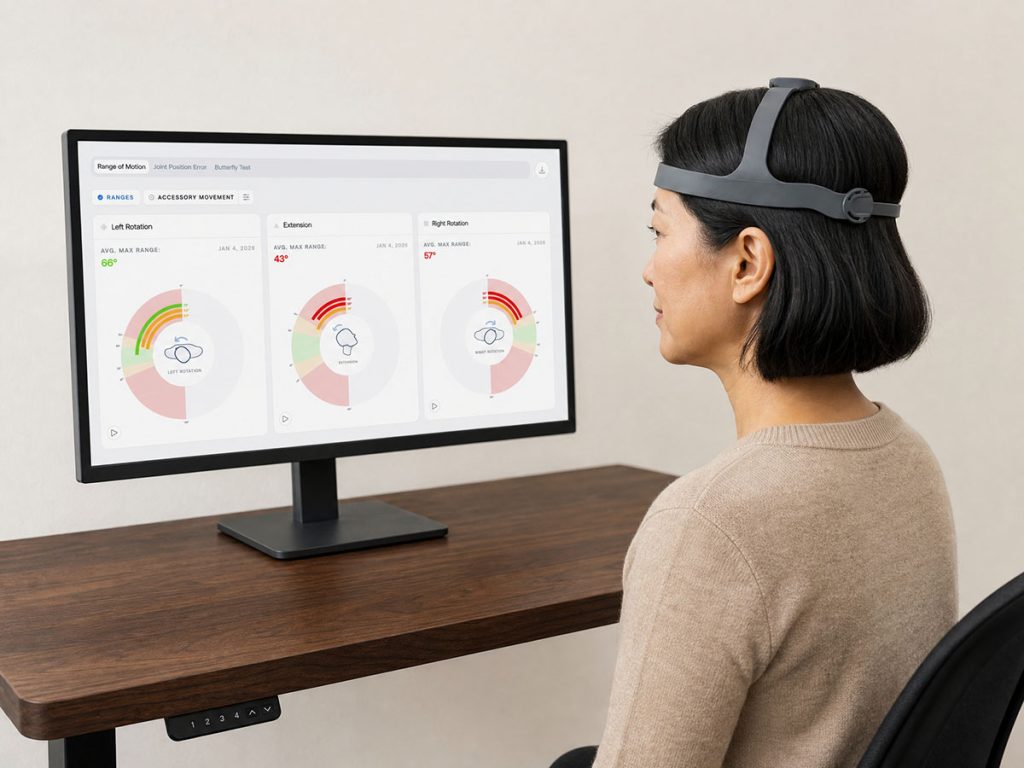
NeckCare is a sensor-based assessment platform that measures three things: how the neck moves, how accurately the brain senses head position, and how well the eyes, head, and neck coordinate together.
- Range of motion. Active cervical motion in all directions, measured precisely rather than estimated. Asymmetries and limitations that are easy to miss visually show up clearly in the data.
- Joint position sense. With eyes closed, you return your head to a target position. The accuracy of that return is a measure of cervical proprioception, which is how well the brain is reading head position from the neck.
- Sensorimotor control. A coordination task that assesses how well the eyes, head, and neck work together. Often the missing piece in post-concussion, whiplash, and cervicogenic dizziness presentations.
Together, these three give a more complete picture than range of motion alone. They are used at the first visit and re-tested at intervals to track changes objectively.
BTrackS Balance
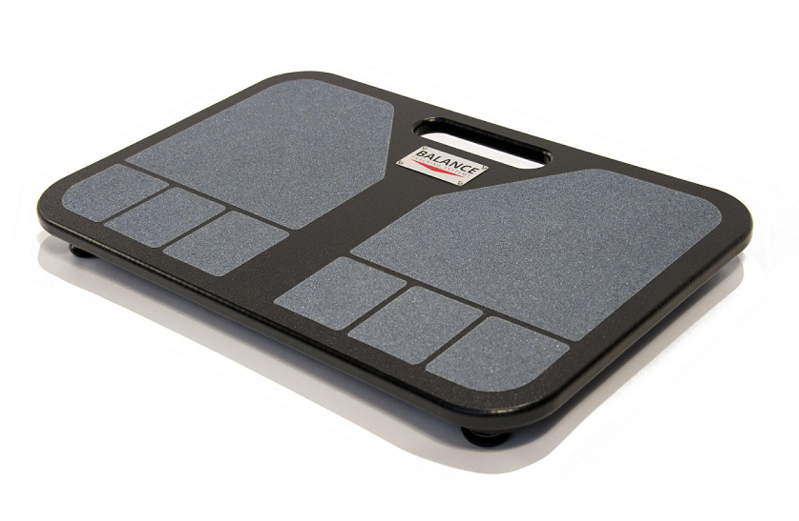
BTrackS is a computerized balance assessment that measures postural sway with research-grade precision. You stand quietly on a force plate with your eyes closed, and the system records how your body’s center of pressure moves over time.
Postural sway is a subtle but reliable marker of how well the nervous system is coordinating balance. Small changes are not visible to the eye, but they show up clearly in the data. The assessment is particularly relevant for patients with dizziness, post-concussion symptoms, hypermobility, or a history of falls.
The test takes about a minute (three 20-second trials), is FDA-registered, and is used in concussion protocols at research and athletic settings. It is used at the first visit to establish a baseline, and re-tested at intervals to track changes.
Tytron Thermography
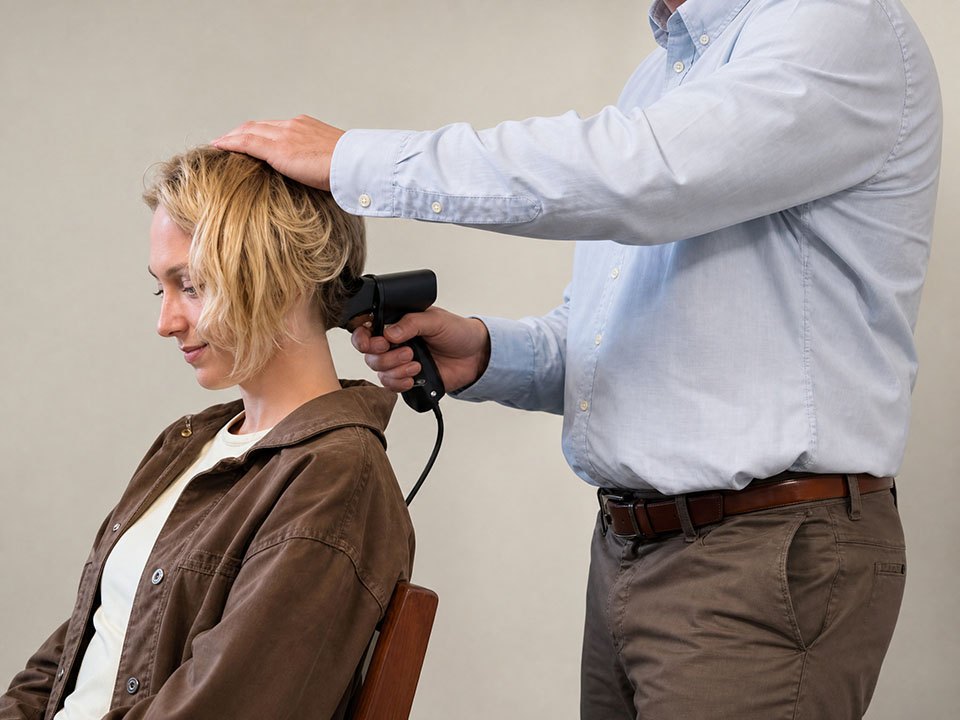
Tytron is a handheld infrared scanner that records skin temperature on both sides of the spine. The scanner rolls along the neck and upper back in a few seconds, capturing temperature differences between the left and right sides at each level.
Skin temperature is regulated by the autonomic nervous system, so consistent left-right asymmetries can indicate something the autonomic side of the nervous system is responding to. The point of Tytron is not to diagnose a specific condition. The point is to look at patterns over time. A pattern that changes between visits is one piece of objective data, alongside the other tests, in deciding whether and how to adjust on a given day.
The scan is non-invasive, takes seconds, uses no radiation, and is safe for all ages.